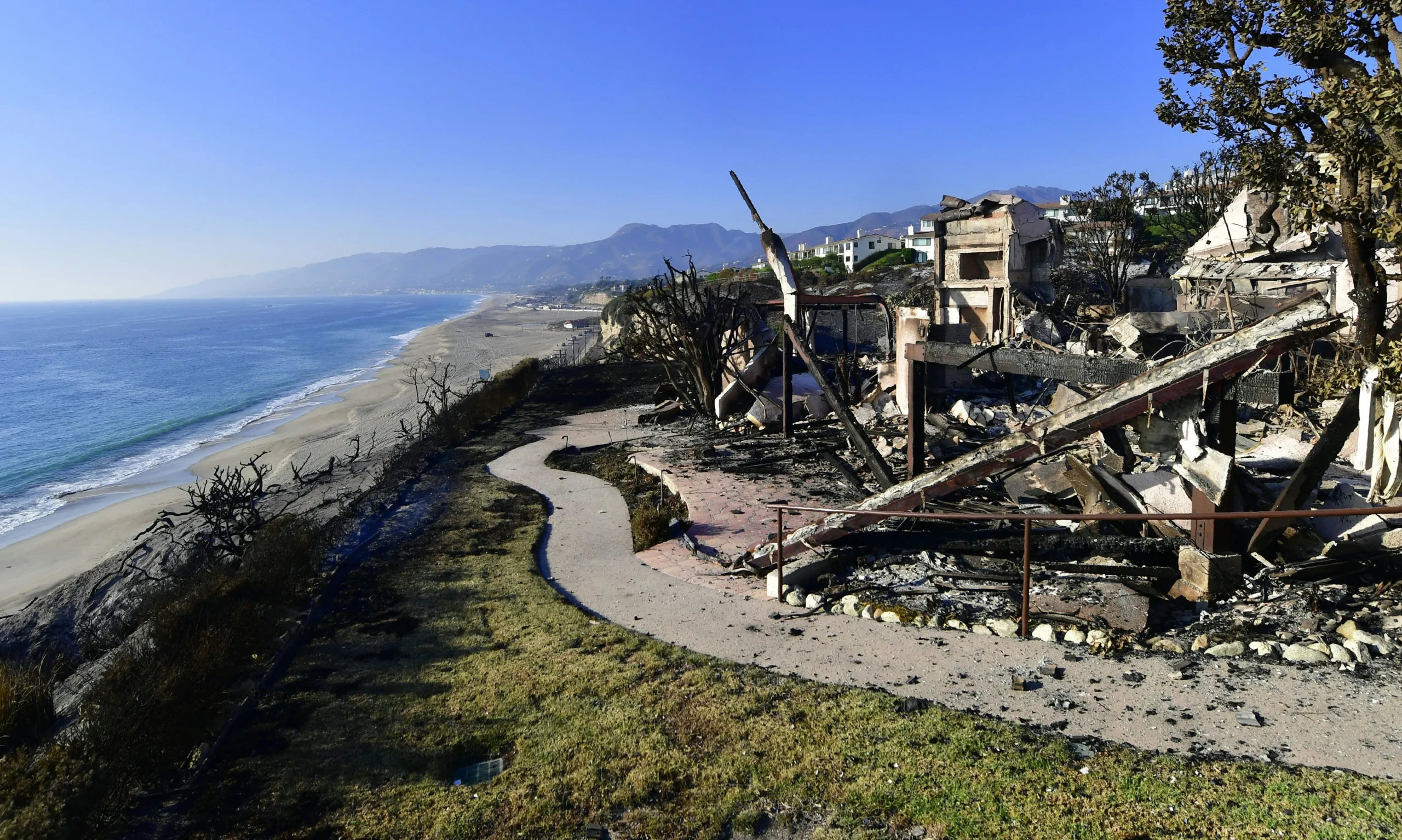
March 12, 2025 | JacobiJournal.com — Wildfire insurance payouts have surged as insurers cover more than $12 billion in damages from the devastating Los Angeles wildfires in January, according to updated figures from California Insurance Commissioner Ricardo Lara. The fires, primarily the Eaton and Palisades wildfires, destroyed tens of thousands of homes and forced mass evacuations.
The latest figures, released through California’s public consumer claims tracking system, nearly double the $6.9 billion reported last month. The bulk of outstanding claims include property damage and debris removal, which will be paid out as homeowners begin the rebuilding process.
Latest Fire Insurance Claims Data
According to the California Department of Insurance (CDI):
- 37,749 insurance claims have been filed for homes, businesses, living expenses, and other disaster-related losses.
- 27,821 claims have received partial payments under laws designed to expedite recovery.
- $12.1 billion has been paid out to policyholders so far.
Early estimates put insured losses at $8 billion for the Eaton and Palisades wildfires alone, while total damages from all five major fires that burned simultaneously in the region could reach up to $40 billion.
Major Insurers Facing Billions in Losses
Lloyd’s of London recently announced expected losses of $2.3 billion, adding to a growing list of companies with billion-dollar claims from the catastrophe.
Munich Re reported in February that it anticipates €1.2 billion ($1.26 billion) in wildfire-related claims. Other major insurers facing significant losses include:
- Travelers Companies Inc. – Estimated $1.7 billion loss.
- Allstate Corp. – More than $1 billion in claims.
- State Farm – Over $1 billion paid out to customers.
- Chubb – Expected costs of $1.5 billion.
- Zurich Insurance Group AG – Estimated $200 million in pretax losses.
- Swiss Re – Expected claims of under $700 million.
Ongoing Financial Impact & Recovery Efforts
Insurer Payouts for LA Wildfires: With thousands of claims still pending and reconstruction efforts underway, insurers are bracing for additional payouts in the months ahead. The fires, fueled by hurricane-force winds, left extensive devastation across multiple counties, marking one of the costliest wildfire events in U.S. history.
For updated wildfire claims and recovery resources, see the California Department of Insurance official wildfire recovery page.
New Update: LA Wildfire Insurance Payouts Reach $25.2 Billion as California Investigates Delayed Funds
LA wildfire insurance payouts have more than doubled since March 2025, reflecting the continuing financial consequences of the Eaton and Palisades fires and the challenges facing thousands of homeowners and businesses attempting to rebuild. According to the California Department of Insurance, insurers had paid approximately $25.2 billion in claims associated with the January 2025 disasters as of July 6, 2026.
The updated figure represents a substantial increase from the $12.1 billion reported in the original March 2025 article. It also demonstrates that insurance payments continued growing as policyholders submitted documentation, insurers evaluated property damage, and rebuilding expenses became clearer.
California’s official wildfire claims tracker recorded 41,727 claims filed and 40,482 claims receiving at least partial payment as of July 6, 2026. These claims included residential property damage, commercial losses, additional living expenses, automobile damage, and other covered expenses associated with the two fires.
However, the number of claims receiving partial payments should not be interpreted as the number of claims fully resolved. Some policyholders may have received initial advances while continuing to seek additional compensation for rebuilding, personal property replacement, smoke contamination, or other covered losses.
The California Department of Insurance has emphasized that wildfire insurance payouts include advance payments intended to accelerate recovery. These payments can provide immediate financial assistance before insurers complete the full adjustment process.
Under applicable California requirements, qualifying policyholders may receive advances for personal property losses and additional living expenses following a declared disaster. These provisions are designed to reduce immediate financial hardship while homeowners determine the full extent of their losses.
Nevertheless, the availability of advance payments does not eliminate disputes concerning property valuations, repair estimates, coverage limits, or the timing of subsequent disbursements.
On October 15, 2026, California regulators announced a new investigation into the handling of wildfire insurance proceeds by mortgage lenders and loan servicers. The investigation followed complaints from homeowners who reported difficulties obtaining insurance funds that had already been issued following the Eaton and Palisades fires.
In many cases, mortgage lenders have a financial interest in insured properties and may receive insurance proceeds jointly with homeowners. Depending on the mortgage agreement and applicable requirements, lenders may hold certain payments in escrow and release funds as repairs or reconstruction progress.
Although these arrangements can help protect the lender’s security interest in a damaged property, delays in releasing funds may create additional obstacles for homeowners attempting to hire contractors, purchase materials, or begin reconstruction.
California regulators directed licensed mortgage lenders and servicers to provide information about their handling of wildfire insurance proceeds. The requested disclosures included the amounts received, the timing of disbursements, whether funds were fully released, and the reasons for delayed or withheld payments.
Financial institutions were directed to report relevant information as of September 30, 2026, with responses due October 29, 2026. The investigation represents an important distinction in the wildfire recovery process because insurance companies may report that claims payments have been issued while homeowners continue experiencing difficulties accessing those funds.
According to California regulators, the Department of Financial Protection and Innovation received more than 160 confidential consumer complaints involving delays or other problems with insurance disbursements following the January 2025 wildfires.
The department reported resolving many of those complaints while continuing to examine whether financial institutions were complying with applicable consumer protection requirements. The investigation does not establish that every delayed payment resulted from unlawful conduct, but it highlights the importance of timely access to insurance proceeds during disaster recovery.
Separate from the investigation involving mortgage lenders, California insurance regulators have taken enforcement action concerning the handling of wildfire claims by State Farm General Insurance Company.
On May 4, 2026, the California Department of Insurance announced that an expedited market conduct examination had identified widespread problems involving claims submitted by survivors of the Eaton and Palisades fires.
According to the department, examiners identified violations in more than half of the claims reviewed. The findings included alleged unreasonable delays, underpayments, inadequate communications, problems involving adjuster assignments, and disputes over smoke damage testing and remediation.
The department announced that it was seeking penalties and corrective measures intended to improve claims handling and resolve outstanding disputes. These regulatory findings should be distinguished from final judicial determinations of liability, particularly where enforcement proceedings remain subject to administrative or legal review.
State Farm disputed the characterization of its wildfire response. In an August 31, 2026 statement, the insurer reported that it had paid more than $6.2 billion in claims associated with the January 2025 Los Angeles wildfires, including approximately $1 billion for smoke-related damage.
The company also stated that it had closed approximately 78% of its wildfire claims while continuing to evaluate outstanding matters. The differing positions illustrate continuing disagreements between regulators, insurers, and policyholders over the adequacy and timeliness of certain wildfire insurance payouts.
For affected homeowners, the central questions often involve whether payments accurately reflect covered damage, whether inspections and testing are sufficient, and whether funds are available when reconstruction expenses arise.
Smoke contamination has become another significant issue affecting LA wildfire insurance payouts, particularly for homeowners whose properties remained standing after the fires.
Although a structure may not have been destroyed by flames, smoke, soot, ash, and other combustion-related contaminants can create substantial remediation expenses. In March 2026, the California Insurance Commissioner’s Smoke Claims and Remediation Task Force reported that more than 13,000 insurance claims involved standing homes affected by smoke damage.
The task force identified concerns involving inconsistent testing procedures, disputes over environmental contamination, disagreements about remediation methods, and questions concerning when homes could safely be occupied.
On September 15, 2026, Governor Gavin Newsom signed Assembly Bill 1795, the Smoke Damage Recovery Act. The legislation establishes standards for investigating, testing, and restoring smoke-damaged homes while creating additional requirements addressing insurance claims involving wildfire-related contamination.
Among its provisions are protections concerning necessary testing, inspection procedures, remediation estimates, and additional living expenses when qualifying homes have not been restored to safe conditions.
The legislation represents an effort to reduce uncertainty in smoke damage claims and establish more consistent expectations for insurers, restoration professionals, and affected property owners. These developments are particularly relevant because disputes over smoke contamination may continue long after visible fire damage has been repaired.
California also enacted broader insurance consumer protections in September 2026 through Senate Bill 876, the Disaster Recovery Reform Act. The legislation responds to concerns raised by wildfire survivors about delayed claims payments, repeated adjuster changes, and difficulties obtaining adequate funds for rebuilding.
Among other measures, the law strengthens requirements concerning claims communication, replacement cost coverage, additional living expenses, and insurer accountability.
The legislation also addresses delays associated with adjuster reassignment by requiring insurers to provide timely status information when a new adjuster takes responsibility for a claim.
These reforms reflect the broader regulatory response to the January 2025 wildfires, which exposed challenges involving both the insurance claims process and the practical availability of recovery funds.
California’s Department of Insurance reported in September 2026 that its intervention in more than 2,000 wildfire-related consumer complaints had helped secure over $338 million in additional payments for affected policyholders.
That amount included more than $50 million associated with smoke damage disputes. These recoveries are distinct from the broader $25.2 billion statewide claims payment figure and should not be added to that total as though they represented a separate category of catastrophe losses.
The growth in LA wildfire insurance payouts demonstrates the extraordinary financial scale of the January 2025 disaster. However, the $25.2 billion paid by July 2026 should not be treated as the final cost of the fires.
Claims payments may continue changing as reconstruction progresses, disputes are resolved, and additional covered expenses become payable. The available figures also do not establish that every policyholder has received the full amount owed under an applicable insurance contract.
For homeowners and businesses, the recovery process can involve several separate stages, including establishing coverage, documenting losses, obtaining an insurer’s payment decision, receiving the funds, and completing repairs or reconstruction.
Delays in wildfire insurance payouts can occur at different points in the claims process, including after an insurance company has issued a payment. California’s October 2026 investigation into mortgage lenders therefore represents a significant development because regulators are examining not only whether insurers have paid wildfire insurance claims but also whether survivors can access the funds needed for rebuilding in a timely manner.
The continuing recovery also raises important questions about insurance accountability, claims transparency, and the distinction between legitimate coverage disputes and potentially unlawful claims-handling practices.
Wildfire insurance fraud involves intentional deception for financial gain, while disagreements over wildfire insurance coverage, property valuations, or payment timing may arise for other reasons. Each situation requires an appropriate examination of the evidence, contractual obligations, and applicable insurance regulations.
As of October 2026, the latest publicly reported statewide claims tracker confirms approximately $25.2 billion in LA wildfire insurance payouts, while ongoing enforcement proceedings, legislative reforms, and financial institution investigations continue shaping the recovery process.
The developments reinforce the importance of accurate claims reporting, transparent payment procedures, effective regulatory oversight, and timely distribution of disaster-related insurance funds.
FAQs: LA Wildfire Insurance
How much has been paid out so far in the wildfire insurance claims?
As of March 2025, insurance companies have paid more than $12 billion in LA wildfire insurance claims, nearly doubling last month’s reported figures.
Which insurers face the largest insurance losses?
Major insurers include Lloyd’s of London, State Farm, Travelers, Allstate, Chubb, Munich Re, and Zurich, all reporting billion-dollar LA wildfire insurance impacts.
What types of damages are covered under payouts?
Claims include home and business property losses, living expenses, debris removal, and other disaster-related damages linked to the January wildfires.
Why are insurance payouts still increasing months later?
Thousands of claims remain under review, and reconstruction efforts are ongoing, meaning insurers are bracing for further payouts as recovery progresses.
How are wildfire insurance payouts helping recovery efforts?
Wildfire insurance payouts are providing critical funds for homeowners to rebuild, cover temporary living expenses, and clear debris, ensuring communities can begin long-term recovery after the January fires.
What role does the California Insurance Commissioner play in wildfire insurance claims?
The California Insurance Commissioner oversees wildfire insurance claims data, ensures companies meet payout obligations, and monitors the financial stability of insurers handling billions in losses.
Stay informed on wildfire recovery, fraud cases, and insurance market updates like this LA wildfire insurance story. Subscribe today at JacobiJournal.com for trusted news and expert analysis.
Read More from JacobiJournal.com
- Lloyd’s Faces $2.3B Hit from Los Angeles Wildfires
- Worker Misclassification Costs Maryland $59M Annually
- Investment Fraud Tops List: FTC Reports Consumers Lost $12.5 Billion to Scams in 2024
- Minnesota Bill Targets AI-Generated Deepfake Pornography
- CFPB Drops Lawsuit Against Major Banks Over Alleged Zelle Fraud