February 17, 2025 | JacobiJournal.com — California Insurance Commissioner Ricardo Lara has denied State Farm’s request for an emergency 22% rate increase, instead calling for an in-person meeting to examine the insurer’s financial standing and the justification behind the proposed rate hike.
State Farm, the largest home insurer in California, had requested immediate approval for the increase, citing massive losses from the recent Los Angeles wildfires. As of February 14, the company reported 11,400 home and auto claims, paying out over $1.35 billion in wildfire-related damages.
Commissioner Lara: State Farm Didn’t Justify the Request
In a letter issued on February 16, Commissioner Lara wrote:
“Under the strict review laid out by Proposition 103, the burden is on State Farm to show why this is needed now. State Farm has not met its burden.”
Instead of granting approval, Lara scheduled a February 26 meeting with State Farm executives to discuss:
- The insurer’s financial stability
- The justification for the emergency rate hike
- Impact on California consumers
- Transparency in State Farm’s decision-making
State Farm responded with disappointment, stating:
“We are very disappointed the Commissioner ignored his department’s recommendation to approve our request for interim rate increases… This decision sends a strong message about the challenges we face in collecting sufficient premiums moving forward.”
State Farm’s Ongoing Struggles in California
California Insurance Commissioner: Despite multiple approved rate hikes, State Farm halted new policy sales in California in May 2023, citing wildfire risks and regulatory challenges. The company has also non-renewed thousands of policies while warning of further market shifts.
State Farm argues that its financial model is unsustainable in the state. According to the company, for every $1 collected in premiums, it has paid out $1.26, resulting in over $5 billion in underwriting losses over the past nine years.
The rejected 22% rate increase would have applied to:
- Homeowners insurance (22%)
- Renters insurance (15%)
- Condo insurance (15%)
- Rental dwelling insurance (38%)
Wildfire Damage: A Major Factor in Rising Rates
Wildfire risks have forced many insurers to rethink their California presence. In the past decade, seven of the state’s ten most destructive wildfires have occurred, leading to escalating insurance claims.
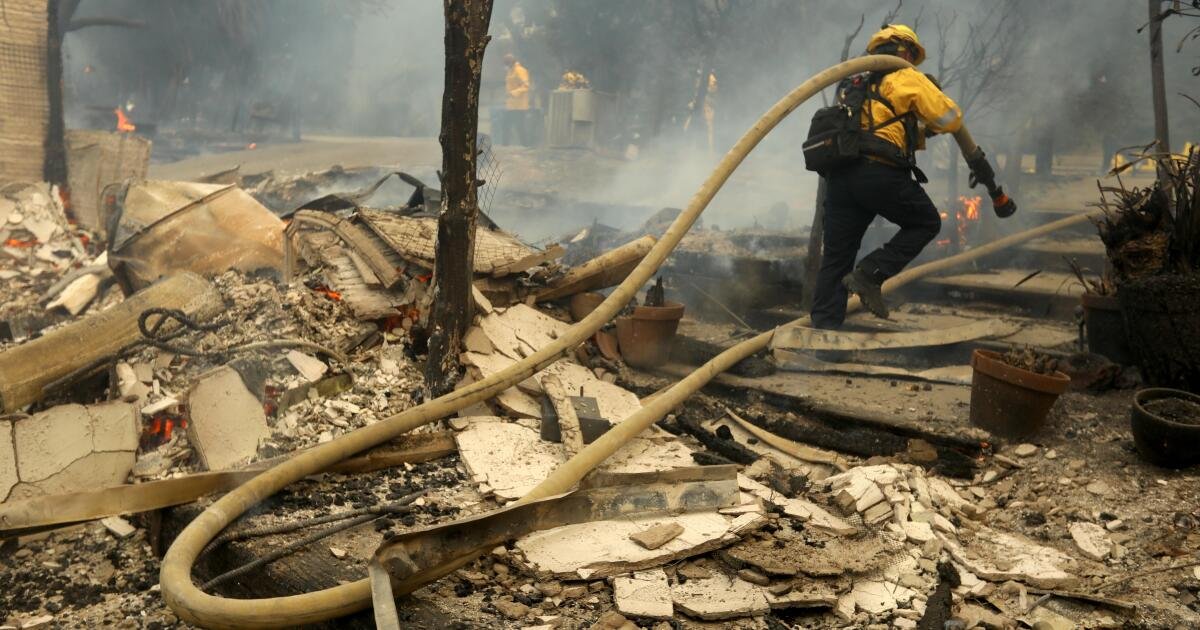
The Los Angeles-area wildfires, including the Palisades and Eaton fires, are expected to generate up to $40 billion in insured losses. The California Department of Insurance (CDI) reports that insurers have already paid out over $6.9 billion, with 33,717 claims filed for home, business, and living expenses.
What’s Next for State Farm and California’s Insurance Market?
State Farm warns that continued financial strain may force further action in California, including reducing coverage offerings. The insurer has also emphasized the need for reinsurance, stating:
“State Farm General still insures high concentrations of risk in California that could generate financial losses multiple times larger than its available capital.”
Meanwhile, Commissioner Lara has signaled that while he is open to discussions, insurers must comply with Proposition 103’s strict rate review process.
With wildfire risks growing, insurers, regulators, and policymakers face urgent challenges in stabilizing California’s home insurance market.
Read the full California Department of Insurance statement here.
New Update: State Farm’s California Rate Increase Survives 2026 Settlement as Wildfire Claims Face Enforcement Action
California’s dispute over State Farm General Insurance Company’s emergency rate increase has undergone substantial developments since Insurance Commissioner Ricardo Lara initially questioned the company’s request in February 2025. State Farm originally sought an emergency homeowners insurance increase of approximately 22%, citing deteriorating financial conditions and mounting exposure from the January 2025 Los Angeles wildfires.
Following additional regulatory proceedings, Commissioner Lara approved a 17% interim homeowners rate increase on May 13, 2025, effective June 1, 2025. The decision followed an administrative hearing in which the insurer presented evidence concerning its financial condition and capital reserves. As part of the arrangement, State Farm was required to obtain a $400 million surplus note from its parent company and refrain from implementing new block nonrenewal programs through the end of 2025.
The interim approval did not resolve every issue in the underlying rate applications, and a broader review continued under California’s Proposition 103 insurance rate regulations. The proceedings demonstrated that the commissioner’s initial refusal to approve the requested increase without additional justification was not a permanent rejection of all emergency rate relief.
A significant resolution emerged on March 6, 2026, when the California Department of Insurance, State Farm, and consumer advocacy organization Consumer Watchdog announced a three-party settlement agreement addressing the emergency interim rate proceeding. Under the agreement, the 17% homeowners increase would remain in place without an additional increase for that category.
The settlement also provided reductions for other policy types. Rental dwelling rates would decrease from the previously approved 38% increase to 32.8%, while condominium policy increases would decline from 15% to approximately 5.8%. Renters insurance rates would increase slightly from 15% to approximately 15.65%.
Affected rental dwelling and condominium policyholders would receive refunds with 10% interest calculated retroactively to June 1, 2025. The agreement also extended restrictions on certain nonrenewals and cancellations for at least another year, providing additional protections for existing customers. The settlement was submitted for administrative review before an independent administrative law judge, with the commissioner responsible for the final regulatory decision.
The Department’s subsequent 2026 communications continued to describe the proceeding as supporting an average 17% homeowners increase, reflecting the substantial difference between the original emergency request and the negotiated outcome.
Separate from the rate proceedings, State Farm faced significant regulatory enforcement action concerning its handling of insurance claims arising from the Palisades and Eaton fires. On May 4, 2026, the California Department of Insurance announced that an expedited market conduct examination had identified 398 alleged violations of state insurance law across 114 of the 220 claim files reviewed.
Regulators reported problems involving delayed investigations, inadequate communications, underpayment of claims, repeated adjuster reassignment, and disputes concerning smoke damage testing and remediation. The Department also identified 34 additional alleged violations through consumer complaints and initiated an administrative enforcement proceeding seeking financial penalties and corrective action.
State Farm policyholders had filed approximately 11,300 residential claims related to the Los Angeles wildfires, making the company’s claims-handling practices a major concern for California regulators. The administrative allegations are separate from the insurer’s request for higher premiums and should not be described as final judicial findings.
Together, the settlement and enforcement proceeding illustrate the competing challenges facing California’s property insurance market: maintaining insurer financial stability, ensuring that premium increases are justified, and protecting policyholders from unreasonable delays or inadequate claim payments. As of October 2026, the State Farm controversy therefore extends beyond the original debate over a 22% request to encompass broader questions about regulatory accountability, consumer refunds, wildfire recovery, and the long-term availability of homeowners insurance.
FAQs: State Farm Rate Hike and California Insurance Market
Why did California block the recent State Farm rate hike?
The Commissioner found State Farm did not justify the emergency request under Proposition 103’s strict review requirements.
How would the State Farm rate hike have affected California homeowners?
The proposal included a 22% increase for homeowners, 15% for renters and condos, and up to 38% for rental dwellings.
What role do wildfire losses play in the State Farm rate hike issue?
State Farm cited billions in wildfire-related claims, saying rising risks make its financial model unsustainable in California.
What’s next for California’s insurance market after the denied State Farm rate hike?
Regulators and insurers will meet to discuss solutions, but more market withdrawals and stricter conditions may follow.
Why can’t insurance companies raise rates in California?
California’s Proposition 103 requires insurers to undergo a rigorous public review process and prove that any proposed increase is justified. Emergency rate hikes face an even higher burden of proof, limiting insurers’ ability to raise rates quickly.
Stay ahead on breaking insurance and regulatory news — subscribe now to JacobiJournal.com for expert insights delivered straight to your inbox.
🔎 Read More from JacobiJournal.com:
- California Greenlights FAIR Plan’s $1 Billion Assessment on Insurers for Wildfire Claims
- Insurers Pay Nearly $7 Billion for LA Wildfire Claims, Report Reveals
- North Carolina Insurance Agent Accused of Forgery and Identity Theft in Life Insurance Scam
- Philadelphia Man Admits to Stealing Deceased Classmate’s Identity for Fraudulent Schemes
- ‘Old-School’ Job Search Secures Lost Wages for Injured Worker