North Carolina Insurance Agent Accused of Forgery and Identity Theft in Life Insurance Scam

February 12, 2025 | JacobiJournal.com — Forgery and Identity Theft: Authorities have charged a North Carolina insurance agent with forgery and identity theft in what investigators describe as a case of insurance fraud, accusing him of fraudulently obtaining a life insurance policy and later attempting to claim benefits. Matthew Jackson Swift, 42, of Mount Airy, is now awaiting a court appearance scheduled for February 19. Insurance fraud is a growing concern in North Carolina and across the United States, costing consumers and companies billions of dollars each year. According to the Coalition Against Insurance Fraud, scams like forged applications, staged claims, and false identities contribute to higher premiums for honest policyholders. State regulators note that cases involving licensed agents are especially troubling, since they undermine trust in an industry meant to provide financial protection for families and businesses. Details of the Allegations According to the North Carolina Department of Insurance (DOI), Swift forged documents twice in late 2023 to secure a life insurance policy from Southern Farm Bureau Life Insurance Co. Investigators revealed that the policyholder had no knowledge of the transaction. Shortly after, Swift allegedly submitted claims against the fraudulent policy, aiming to collect payouts unlawfully. Law enforcement officers arrested Swift earlier this month. However, he posted a $75,000 bond and was released shortly after. His upcoming court hearing will determine the next steps in the case. Swift’s Insurance Background and Previous Arrest Records from the National Association of Insurance Commissioners (NAIC) indicate that Swift holds a valid insurance producer license in North Carolina. However, his broker license expired in 2023. Despite this, he remains authorized to sell life, health, property, and casualty insurance. In the past, he worked with both Progressive Southeastern Insurance and Southern Farm Bureau Life. Notably, this is not the first time Swift has faced similar allegations in. Four months ago, authorities arrested him on related charges. In response, he denied any wrongdoing, claiming his former spouse had fabricated the accusations. Ongoing Investigation and Consumer Protection Efforts As the investigation continues, officials emphasize the importance of cracking down on insurance fraud to protect policyholders. The North Carolina DOI remains committed to holding fraudulent agents accountable and ensuring the integrity of the insurance industry. Insurance fraud not only impacts companies and regulators but also drives up costs for everyday consumers who rely on honest coverage. Authorities stress that even a single act of fraud can erode public trust in the system, making it harder for families and businesses to feel secure. By aggressively pursuing cases like this one, state officials aim to send a strong message that deceptive practices will not be tolerated in North Carolina’s insurance market. Read the official statement from the North Carolina Department of Insurance. FAQs: North Carolina Insurance Agent Fraud Case What are the specific charges against the North Carolina insurance agent forgery case? He faces allegations of forging documents to secure a fraudulent life insurance policy and attempting to claim benefits without the policyholder’s knowledge. Was this insurance agent accused of similar charges before? Yes, this is not his first arrest. Authorities previously charged him with similar allegations just four months earlier. What happens next in this insurance fraud case? He is scheduled to appear in court on February 19, where the next steps in the legal process will be determined. How does the state protect consumers from cases like this? The North Carolina Department of Insurance actively investigates insurance fraud and enforces strict actions against agents who violate consumer trust. How do you know if an agent is scamming you? Red flags often appear before insurance fraud becomes obvious. Watch for unexplained policy changes, premium payments that never reach the insurer, or pressure to sign documents you haven’t reviewed. Another warning sign is discovering a policy opened in your name without consent. To protect yourself, confirm the agent’s license status with your state insurance department and request all policy information directly from the insurer rather than relying solely on the agent. Stay informed on breaking news and fraud investigations. Subscribe to JacobiJournal.com today for trusted updates. 🔎 Read More from JacobiJournal.com:
Maryland Man Found Guilty in $20 Million Insurance Fraud Scheme
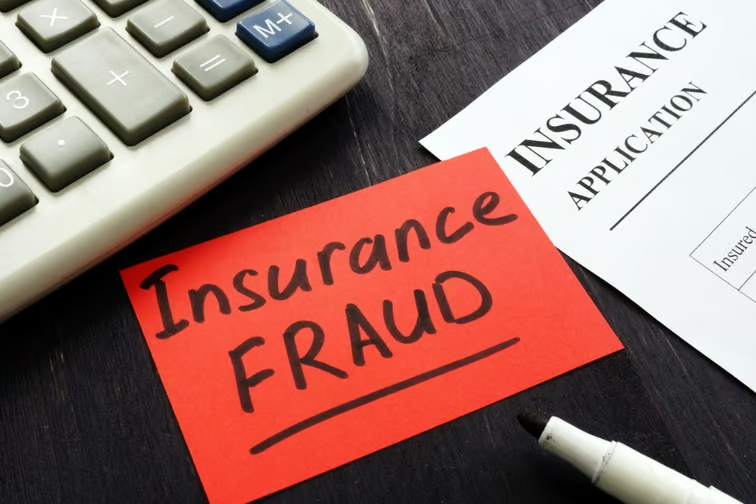
January 27, 2025 | JacobiJournal.com — Maryland Insurance Fraud: A federal jury convicted a Maryland man for orchestrating an elaborate insurance fraud scheme that involved life insurance policies worth over $20 million. The case also included charges of money laundering, tax fraud, and identity theft. Details of the Fraudulent Scheme James Wilson, a resident of Owings Mills, Maryland, conspired with others to defraud insurance companies by securing more than 30 life insurance policies using false information. According to court documents and trial evidence, Wilson misrepresented the applicants’ health, financial status, and existing life insurance coverage to obtain these policies. The total death benefits from the fraudulently obtained policies exceeded $20 million. In addition, Wilson defrauded individual investors by convincing them to provide funds, which he then used to pay the premiums for these policies. Prosecutors revealed that Wilson used a web of bank accounts, including those under trust names, to hide the fraudulent transactions. Tax Evasion and Identity Theft Charges Wilson also concealed proceeds from his fraudulent activities on his tax returns. Officials reported that he filed false individual income tax returns for 2018 and 2019, failing to disclose $5.7 million and $2 million in fraud proceeds, respectively. Moreover, the charges included aggravated identity theft related to his criminal activities. Potential Penalties and Sentencing Wilson faces severe penalties for his crimes. For each count of conspiracy, wire fraud, mail fraud, and money laundering, he could receive a maximum sentence of 20 years in prison. Additionally, each count of filing a false tax return carries a maximum penalty of three years, while each count of aggravated identity theft carries up to two years in prison. Wilson’s sentencing is scheduled for May 1. For the original report, refer to the U.S. Attorney’s Office for Maryland. FAQs: Maryland Insurance Fraud Case What is the Maryland insurance fraud case about? The case centers on James Wilson of Owings Mills, Maryland, who orchestrated a $20 million life insurance scam by filing more than 30 fraudulent policies using false information. What other crimes were connected to this insurance scam? In addition to fraud, prosecutors charged Wilson with money laundering, tax evasion, and aggravated identity theft, all tied to his illegal financial network. What penalties could James Wilson face in this fraud prosecution? Wilson could receive up to 20 years in prison for each count of conspiracy, wire fraud, and money laundering, along with added time for tax and identity theft charges. Why is this Maryland fraud conviction significant? This high-profile prosecution shows how large-scale insurance scams can also trigger tax violations, identity theft, and investor losses, making it a landmark Maryland insurance fraud case. How long do you go to jail for insurance fraud in Maryland? Penalties for insurance fraud in Maryland vary depending on the severity of the crime. In James Wilson’s case, federal charges carry up to 20 years in prison for each count of conspiracy, wire fraud, and money laundering. Additional time may be added for tax evasion and aggravated identity theft. What’s the maximum sentence for insurance fraud? The maximum sentence for insurance fraud can reach 20 years per federal count for serious schemes involving large sums, such as the $20 million life insurance scam orchestrated by James Wilson. State-level insurance fraud penalties may differ but can still be substantial. How do I report insurance fraud in Maryland? Insurance fraud can be reported to the Maryland Insurance Administration (MIA) online, by phone, or via mail. Consumers and industry professionals are encouraged to provide detailed information to help authorities investigate potential fraudulent activities. For more updates on financial crime, fraud prosecutions, and regulatory enforcement, subscribe to JacobiJournal.com today. 🔎 Read More from JacobiJournal.com: