Federal Court Dismisses Hurricane Maria Fraud Suit Against Insurance Adjuster
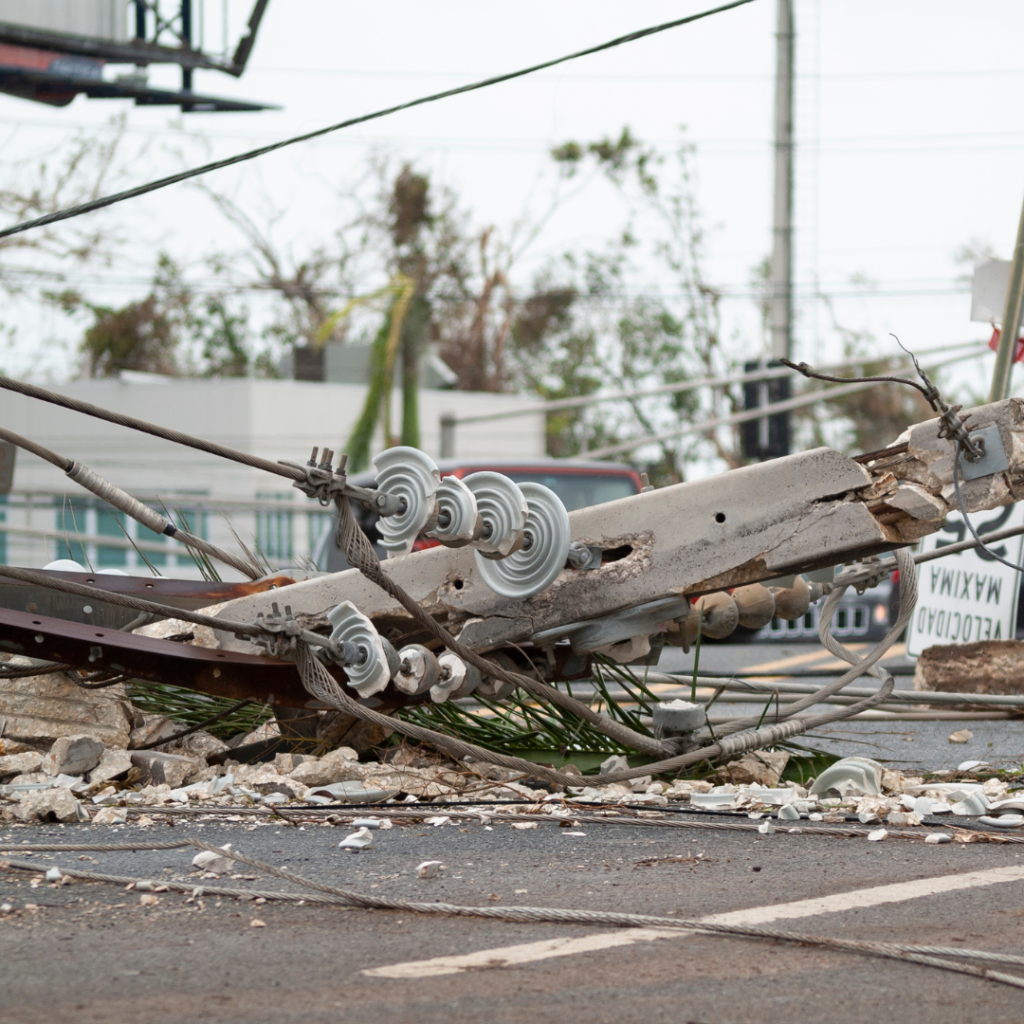
September 10, 2025 | JacobiJournal.com – A fraud suit filed by an insurer has been dismissed by a Puerto Rico federal judge, who ruled against allegations that a public adjuster inflated damage calculations related to Hurricane Maria. The case, which alleged insurance fraud in the aftermath of the 2017 storm, was thrown out after the court determined the claims were legally insufficient to proceed. The outcome of the fraud suit highlights the challenges insurers face when trying to prove exaggerated or false claims in court. Without clear evidence of intent, such fraud suits often fail to advance, signaling that judges will require a higher burden of proof in disaster-related insurance disputes. Court Rejects Insurer’s Allegations The insurer had argued that the public adjuster exaggerated the scale of storm-related damages suffered by a Puerto Rican municipality, seeking higher payouts than warranted. However, the federal court concluded that the evidence presented did not meet the threshold to prove fraudulent intent. The dismissal ends the litigation, at least for now, though appeals remain possible. Hurricane Maria’s Long Legal Aftermath Hurricane Maria caused catastrophic losses across Puerto Rico, leading to years of disputes between policyholders, municipalities, and insurers. Allegations of fraud, inflated claims, and delayed payouts have become a recurring theme in litigation tied to disaster recovery. This case highlights how courts are scrutinizing fraud claims while balancing the need to ensure fair compensation for storm victims. Broader Implications for Insurance Fraud Cases Legal analysts say the ruling underscores the difficulty insurers face in proving fraud against adjusters, particularly in the high-stakes context of natural disasters. With billions in claims tied to hurricanes and other catastrophic events, the decision could influence how insurers pursue similar cases in the future. For access to official case filings and federal court rulings, visit the U.S. District Court for the District of Puerto Rico. FAQs: Hurricane Maria Fraud Suit What was the lawsuit about? An insurer alleged that a public adjuster inflated damage estimates for a Puerto Rican town after Hurricane Maria, leading to excessive insurance claims. Why did the court dismiss the case? The judge ruled that the evidence did not sufficiently prove fraud or misrepresentation by the public adjuster. Does this ruling impact future insurance fraud suits? Yes. It highlights the challenges insurers face in proving fraud in disaster-related claims, potentially shaping strategies in future litigation. What does this mean for Hurricane Maria recovery claims? It reflects the ongoing complexity of resolving insurance disputes tied to the storm and shows that fraud claims require strong, verifiable evidence to succeed. Stay updated on insurance fraud litigation and public integrity cases by subscribing to JacobiJournal.com. 🔎 Read More from JacobiJournal.com:
Eighth Circuit Affirms $27M Insurance Win in Carcinogenic Soot Case

September 8, 2025 | JacobiJournal.com — A divided Eighth Circuit panel has upheld a $27 million jury award against Travelers Insurance in favor of a Missouri apartment complex, marking a significant precedent in insurance litigation tied to environmental health hazards. The ruling hinged on expert testimony that carcinogenic soot was present, creating liability for the insurer. Federal Court Makes ‘Erie Guess’ Because Missouri courts had not yet addressed this specific insurance dispute, the Eighth Circuit made an “Erie guess” — a legal method used by federal courts to predict how a state’s highest court would rule in the absence of controlling precedent. In doing so, the appellate judges sided with the apartment complex, affirming the jury’s substantial award. Expert Testimony Central to the Case Travelers had argued that the apartment complex failed to prove damages tied to soot exposure. However, the panel determined that expert testimony was sufficient to establish that carcinogenic particles were present, making the insurer liable for coverage. This decision underscores the growing importance of scientific and environmental evidence in large-scale insurance disputes. Broader Implications for Insurers The ruling may have far-reaching consequences for insurers facing claims tied to fire residue, toxic substances, and environmental contamination. Legal analysts note that the Eighth Circuit’s affirmation demonstrates courts’ willingness to rely on expert testimony even in the absence of clear state-level precedent. This could encourage more property owners to pursue claims when insurers attempt to deny coverage for environmental hazards. For official court documentation, readers can access the Eighth Circuit Court of Appeals opinions on the U.S. Courts website. FAQs: Eighth Circuit Insurance Ruling What was the dispute about? An apartment complex claimed its property was contaminated by carcinogenic soot, leading to a jury award of $27 million against Travelers Insurance. Why is the “Erie guess” significant? It shows how federal courts predict state law when no precedent exists, setting an influential example in insurance litigation. What role did expert testimony play? The court found expert testimony about the presence of carcinogenic soot sufficient to support the jury’s verdict, despite the insurer’s objections. How does this ruling affect future insurance cases? It strengthens the role of scientific evidence in coverage disputes and signals that courts may favor policyholders when insurers challenge environmental damage claims. Stay ahead on legal accountability and insurance litigation by subscribing to JacobiJournal.com. 🔎 Read More from JacobiJournal.com:
Nautilus Insurance Sues Fleming After Murdaugh’s Conviction

January 8, 2025 | JacobiJournal.com — Days after a court ordered Alex Murdaugh to pay almost $15 million to Nautilus Insurance Co., his co-conspirator, Cory Fleming, is now on trial for his involvement in the fraudulent scheme. The proceedings mark another chapter in the ongoing fallout from the Murdaugh scandal, with prosecutors and civil attorneys arguing that Fleming played a direct role in helping divert settlement funds that were meant for the family of Gloria Satterfield. His trial is drawing significant public attention, not only because of his long association with Murdaugh but also because it highlights how deeply the fraud reached into South Carolina’s legal and insurance systems. Murdaugh’s Fraud and Legal Consequences Murdaugh, a prominent South Carolina attorney, drew global attention after he was convicted in 2023 for murdering his wife and son. Along with the murders, Murdaugh admitted to 27 counts of financial crimes, including defrauding insurance companies. Nautilus Insurance sues Fleming in connection with these crimes. Murdaugh and his friend Fleming exploited an insurance settlement following the 2018 death of Murdaugh’s housekeeper, Gloria Satterfield. Murdaugh falsely claimed that his dogs caused her fall at the family’s hunting camp. He convinced Satterfield’s family to file a claim under his umbrella policy, and Nautilus Insurance paid $3.8 million. Instead of forwarding the settlement money, Murdaugh and Fleming allegedly diverted much of it for personal use. After Murdaugh’s confession, a court ordered him to pay $14.8 million in damages to Nautilus. Fleming, who helped with the fraud, now faces trial in a civil lawsuit for his role in the scheme. Fleming’s Trial and Legal Arguments Nautilus Insurance accuses Fleming of civil conspiracy and negligence, claiming that the fraud deceived and harmed the insurer. Fleming’s defense argues that Nautilus had ample time to investigate the claim and failed to uncover evidence of fraud. The Charleston Post and Courier reported that a Nautilus agent raised concerns about the Satterfield claim. Despite these warnings, the company proceeded with the settlement. After Murdaugh and Fleming’s criminal convictions, Nautilus gathered the evidence it needed and filed this civil suit. Fleming’s trial began on Monday and will likely conclude within the week. For further details, read the original article on Bloomberg. FAQs: Nautilus Insurance Sues What is Nautilus Insurance suing Cory Fleming for? Nautilus Insurance sues Fleming for civil conspiracy and negligence tied to the fraudulent Satterfield settlement. How is Alex Murdaugh connected to the Nautilus Insurance lawsuit? Murdaugh and Fleming allegedly diverted $3.8M from Nautilus Insurance, leading to Murdaugh’s $14.8M judgment and Fleming’s civil trial. Why does Nautilus Insurance seek damages from Fleming? Nautilus Insurance sues Fleming to recover losses from the fraudulent settlement that harmed the insurer and violated its trust. What impact could Nautilus Insurance’s lawsuit have on future fraud cases? If successful, the lawsuit may strengthen insurers’ use of civil conspiracy claims in fraud recovery efforts. Is Nautilus Insurance Company an admitted carrier? No. Nautilus Insurance Company operates as a non-admitted, surplus-lines carrier. That means it provides specialty coverage in situations where traditional admitted insurers may not offer policies. Who is Cory Fleming? Cory Fleming is a former South Carolina attorney and longtime friend of Murdaugh. Prosecutors say he assisted Murdaugh in diverting millions from insurance settlements, including the payout intended for the family of Gloria Satterfield. Stay ahead of the latest fraud and insurance litigation cases. Subscribe today at JacobiJournal.com for expert legal insights and breaking updates. 🔎 Read More from JacobiJournal.com:
New Jersey Supreme Court Rules Insurer Not Obligated to Defend Employer in Injury Lawsuit

December 20, 2024 | JacobiJournal.com — The New Jersey Supreme Court insurance ruling determined that Hartford Underwriters Insurance Co. had no duty to defend SIR Electric LLC against a personal injury lawsuit filed by an employee, Dionicio Rodriguez, who alleged negligence and intentional harm. This decision upholds the insurer’s stance and clarifies the scope of coverage under workers’ compensation and employers’ liability policies. The ruling is significant because it reinforces how policy language governs an insurer’s duty to defend. By siding with Hartford, the New Jersey Supreme Court insurance ruling underscores that negligence-based claims are barred under workers’ compensation, while intentional wrongdoing claims can still be excluded under employer liability coverage. For employers, this decision highlights the importance of understanding coverage limitations and the potential risks of litigation outside traditional workers’ compensation protections. Court’s Interpretation of Policy Coverage The high court supported the lower courts’ view that Hartford was not required to defend SIR Electric. Rodriguez’s claims of negligence and recklessness fell under the workers’ compensation exclusivity bar within Hartford’s policy. However, the court concluded differently on the intentional wrongdoing claim. It determined that this claim, while not covered under the workers’ compensation section, was excluded by the employer liability section due to its intentional nature. This interpretation demonstrates how courts strictly apply exclusions when evaluating employer liability coverage. The New Jersey Supreme Court insurance ruling makes clear that even when a claim falls outside the scope of workers’ compensation, insurers may still deny coverage if the policy explicitly excludes intentional acts. Legal analysts note that this approach reinforces the balance between protecting employees’ rights and preserving insurers from liabilities they never agreed to cover, shaping how future disputes over coverage will be litigated. Case Background and Implications While working for SIR Electric, Rodriguez injured himself when opening an electrical panel. He initially filed for workers’ compensation benefits, which Hartford provided. Later, Rodriguez pursued a personal injury lawsuit against SIR, seeking additional damages. When SIR requested defense from Hartford, the insurer refused, prompting SIR to sue Hartford for wrongful denial of coverage. A trial judge sided with Hartford, dismissing SIR’s complaint. The judge categorized Rodriguez’s lawsuit as a Laidlow claim, based on a 2002 case that allows exceptions to the workers’ compensation exclusivity for intentional wrongs. The Supreme Court confirmed that the negligence-based claims were barred by workers’ compensation laws. However, it ruled that Rodriguez’s intentional wrongdoing claim was not covered because Hartford’s policy specifically excluded injuries intentionally caused by the employer. Legal Precedents and Future Impact The Supreme Court’s ruling clarifies that while workers’ compensation laws cover negligence claims, intentional wrongdoing is excluded from employer liability coverage under Hartford’s policy. This decision reinforces the parameters of workers’ compensation and employers’ liability policies in New Jersey. For more detailed reporting, refer to the original article from AP News. FAQs: New Jersey Supreme Court Insurance Ruling What did the New Jersey Supreme Court decide in the insurance ruling? The New Jersey Supreme Court insurance ruling held that Hartford had no obligation to defend SIR Electric in an employee injury lawsuit. How does the New Jersey Supreme Court insurance ruling affect workers’ compensation? The decision reinforced that negligence claims fall under workers’ compensation, while intentional wrongdoing is excluded from employer liability coverage. Why was Hartford not obligated under the New Jersey Supreme Court insurance ruling? Hartford’s policy excluded coverage for intentional harm, meaning the insurer was not obligated to defend SIR against intentional wrongdoing claims. What is the broader impact of the New Jersey Supreme Court insurance ruling? The ruling clarifies employer liability policies in New Jersey, guiding insurers and employers on coverage boundaries for negligence versus intentional claims. What is an insurer’s duty to defend in New Jersey? An insurer’s duty to defend arises when a policy covers the allegations in a lawsuit. In this case, Hartford had no duty to defend because the claims either fell under workers’ compensation exclusivity or were excluded due to intentional acts. When can an employer’s liability policy exclude coverage? Employer liability policies can exclude coverage for injuries caused intentionally by the employer. The New Jersey Supreme Court confirmed that Hartford’s policy explicitly excluded intentional wrongdoing. How does a Laidlow claim affect workers’ compensation coverage? A Laidlow claim provides exceptions to workers’ compensation exclusivity for intentional harm. Negligence-based claims remain barred under workers’ compensation, but intentional acts can create separate liability considerations. For deeper insights on insurance litigation, fraud cases, and court rulings, subscribe to JacobiJournal.com for exclusive updates. 🔎 Read More from JacobiJournal.com: