LAPD Officer Charged with Insurance Fraud During Disability Leave

March 11, 2026 | JacobiJournal.com — A Los Angeles Police Department officer has been charged with felony insurance fraud after allegedly exaggerating an on-duty injury to collect disability benefits while participating in physically demanding activities, including skydiving. The case has sparked renewed attention on oversight in law enforcement and the integrity of California’s workers’ compensation system. Christopher Brandon Carnahan, 43, of Norwalk, faces two counts of felony insurance fraud, according to the Los Angeles County District Attorney’s Office. Prosecutors allege that Carnahan claimed a left elbow injury sustained in May 2023, which led to temporary total disability (TTD) status, entitling him to full salary while recovering. What Are Temporary Total Disability Benefits and Why They Matter California law provides substantial benefits for officers injured in the line of duty. Those placed on TTD status receive 100% of their base salary tax-free for up to a year. If the injury persists, benefits continue at two-thirds of salary. The purpose is to allow officers to recover without financial stress. However, prosecutors allege that Carnahan abused this system. While collecting disability benefits, he reportedly went skydiving at Skydive Elsinore and maintained a regular fitness routine—activities incompatible with a severe elbow injury. Experts warn that such cases undermine public trust and increase scrutiny on all workers’ compensation claims. The Los Angeles County District Attorney emphasized, “This is about accountability. Officers collecting disability benefits while engaging in high-risk, physically demanding activities are committing fraud.” Carnahan is being held on $100,000 bail and could face up to six years in county jail if convicted. Why Law Enforcement Fraud Cases Are on the Rise Recent years have seen multiple instances of alleged fraud among first responders in California. In December, a California Highway Patrol officer received a 270-day sentence for lying about an injury to secure medical retirement. Similarly, a former Westminster police officer faced 15 felony charges for claiming disability while skiing and visiting Disneyland. An L.A. County Fire Department captain was charged with four felonies for falsifying injuries and doctor notes. These cases highlight the need for stricter oversight and robust investigative measures. Surveillance, medical record review, and witness interviews are standard in identifying false claims. Public agencies are also emphasizing ethics and internal accountability programs to mitigate risk. How Insurance Fraud Impacts California’s Public Safety Systems Fraudulent disability benefits claims drive up costs for taxpayers and employers. According to the California Department of Insurance, fraudulent claims cost state and local governments millions annually. Insurance companies employ investigative units and coordinate with law enforcement to detect suspicious claims. Moreover, these cases can damage morale among honest officers, create skepticism about legitimate injuries, and strain workers’ compensation resources. Transparency and accountability are crucial to maintaining public trust and protecting public funds. Proactive measures, such as auditing claims and implementing digital tracking of medical evaluations, are being adopted to reduce fraud risk. Citizens and officials alike are demanding more rigorous enforcement to prevent such abuses. What the Public Can Learn from the Carnahan Case The Carnahan incident illustrates the importance of vigilance in both personal and organizational compliance. Public agencies are reminded that fraud detection tools, oversight mechanisms, and ethical training are vital. Citizens should also understand that legal penalties for insurance fraud in California include up to six years in county jail and substantial fines. For individuals interested in broader coverage on law enforcement and disability fraud, the Los Angeles Times provides in-depth reporting on similar cases: Read the full investigative report. Act now to understand the patterns and protect taxpayer resources. FAQs: About Insurance Fraud and Disability Benefits What constitutes insurance fraud in California? Insurance fraud occurs when someone knowingly makes false statements or misrepresentations to obtain benefits they are not entitled to. How are workers’ compensation claims investigated? Investigations often include reviewing medical records, conducting surveillance, and interviewing witnesses to verify the legitimacy of claims. Can physical activities like skydiving affect a disability claim? Yes. High-intensity activities inconsistent with a claimed injury can trigger investigations and criminal charges. What are the penalties for felony insurance fraud in California? Convictions can result in up to six years in county jail and significant financial penalties, along with permanent criminal records. Stay ahead of financial scams and fraud investigations—subscribe to JacobiJournal.com for authoritative reports, investigative coverage, and expert insights. 🔎 Read More from JacobiJournal.com:
Louisiana Court Revives LUBA Fraud Case in Workers’ Compensation Dispute

October 17, 2025 | JacobiJournal.com — LUBA fraud case revival gains momentum as a Louisiana appellate court has reinstated a lawsuit brought by LUBA Workers’ Comp and TruCare Home Health LLC against former employee Rebecca Sears, marking a win for insurers seeking to curb false workers’ compensation claims. The lawsuit alleges that Sears made misleading statements to medical providers to prolong benefits tied to a 2014 workplace injury. The court’s decision reverses an earlier dismissal, allowing the case to move forward. The reinstatement of the LUBA fraud case highlights the judiciary’s willingness to scrutinize potential abuse in workers’ compensation programs, ensuring that insurers have the opportunity to fully present evidence of fraudulent activity. Legal experts note that cases like this set an important precedent, reinforcing the message that claims manipulation or exaggeration will face rigorous review, protecting both insurers and the integrity of the compensation system. Appeals Court Finds Grounds for Reconsideration The panel concluded that in the LUBA fraud case, LUBA and TruCare presented enough factual support to suggest Sears may have intentionally exaggerated her injury-related limitations. That finding satisfied the threshold for reviving the LUBA fraud case, which will now proceed to further evidentiary review. Legal observers say the outcome signals that fraud allegations in compensation disputes deserve full examination before dismissal. The decision also emphasizes that the LUBA fraud case could serve as a reference point for future claims involving potential misrepresentation of medical conditions. Insurers and regulators may increasingly rely on this precedent to justify detailed investigations, ensuring that fraudulent or inflated claims are thoroughly vetted before any dismissal, ultimately strengthening oversight within workers’ compensation programs. Insurers Push Back on Questionable Claims The ruling reflects a growing trend among insurers to challenge questionable workers’ compensation claims through aggressive litigation. LUBA’s persistence demonstrates an industry-wide effort to reclaim funds lost to fraudulent activity. According to analysts, Louisiana’s stance reinforces national trends toward tighter scrutiny of claimant conduct and greater accountability in medical documentation. The revival of the LUBA fraud case further underscores how insurers are increasingly empowered to contest dubious claims, signaling that courts are willing to support thorough investigations when evidence of potential fraud exists. This trend encourages more rigorous internal reviews and documentation practices, helping carriers protect financial resources while deterring future attempts at benefits manipulation. Broader Impact on Compensation Enforcement The decision may encourage both insurers and state regulators to adopt stronger investigative protocols. Courts appear increasingly willing to weigh in when inconsistencies suggest intentional deception or overstatement of medical conditions. By reviving this appeal, the court has strengthened the balance between employee protection and insurer integrity, a recurring issue in compensation litigation. Learn more about fraud enforcement in workers’ compensation programs from the National Insurance Crime Bureau (NICB). FAQs: LUBA Fraud Case Appeal 2025 Who are the parties in the LUBA fraud case? LUBA Workers’ Comp and TruCare Home Health LLC are suing former employee Rebecca Sears for allegedly making false statements to extend benefits. What did the Louisiana appeals court decide? The court revived the insurers’ fraud case, allowing it to continue after a previous dismissal. Why is this case significant for insurers? It reinforces insurers’ rights to pursue compensation fraud claims and signals judicial support for thorough fraud review. Where can readers find more about compensation fraud trends? Visit the National Insurance Crime Bureau (NICB) for verified industry data and prevention initiatives. Stay informed on the latest insurance and fraud litigation—subscribe to JacobiJournal.com for expert analysis and weekly updates. 🔎 Read More from JacobiJournal.com:
ICW Group Names Mark Moitoso as President to Drive Growth and Expansion
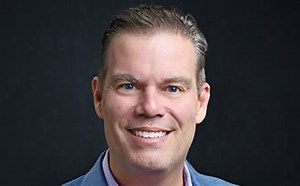
January 29, 2025 | JacobiJournal.com — ICW Group Insurance Companies, a top property and casualty insurance provider, has appointed Mark Moitoso as its new President, effective immediately. In this role, Moitoso will lead underwriting and shared services operations, focusing on business growth, product line expansion, and operational efficiency. Moitoso’s appointment comes at a time when ICW Group is looking to strengthen its market position and enhance operational performance across its nationwide network. Industry analysts note that his extensive background in risk management and team leadership could help the company streamline processes, develop innovative insurance solutions, and better respond to evolving customer needs in the property and casualty sector. Bringing 35 Years of Expertise With more than 35 years of industry experience, Moitoso brings a deep understanding of property and casualty insurance. His career spans multiple leadership roles, where he has successfully built teams and delivered tailored insurance solutions. He takes over the position from Kevin Prior, who will continue serving as CEO. “We’re excited to welcome Mark to our leadership team,” said Prior. “His extensive expertise and strong track record of driving results make him the ideal leader to propel ICW Group forward. We are confident that under his leadership, we will continue delivering top-tier insurance experiences for our policyholders and agent partners.” A Vision for Growth and Operational Excellence Moitoso will also oversee shared services operations, managing more than 1,200 employees nationwide. These teams support policyholders and agents across various product lines, including workers’ compensation and catastrophe coverage. “I am thrilled to join a company dedicated to exceptional customer service and innovation,” Moitoso stated. “ICW Group has built an outstanding reputation for integrity and sustainable growth. I look forward to leveraging my experience to strengthen its foundation and help drive the company to new heights.” A Proven Leader in the Insurance Industry Before joining, Moitoso served as Executive Vice President, Risk Practices at Lockton Companies, working in Kansas City and Atlanta. Previously, he spent 25 years at Liberty Mutual, holding various leadership roles. Based in San Diego, he is a Fellow of the Casualty Actuarial Society and a Member of the American Academy of Actuaries. About ICW Group Headquartered in San Diego, ICW Group Insurance Companies is the largest privately held insurance company in California. The company specializes in Workers’ Compensation, Assumed Reinsurance, and Catastrophe coverage, with a strong focus on helping policyholders reduce claim costs and supporting trusted insurance agents. For further details, read the full announcement from ICW Group. FAQs: About the ICW Group Who is the new President of ICW Group? Mark Moitoso has been named President of ICW Group, bringing more than 35 years of insurance industry experience to the role. What responsibilities will Mark Moitoso have? He will oversee underwriting and shared services operations, focusing on business growth, product expansion, and operational efficiency. Why is leadership change significant? The appointment highlights ICW Group’s commitment to strengthening its market position and delivering value to policyholders and agent partners. What industries does ICW Group primarily serve? ICW Group specializes in property and casualty insurance, including workers’ compensation, assumed reinsurance, and catastrophe coverage. Who is the CEO of ICW Group? Kevin Prior serves as the CEO. He continues in this role while Mark Moitoso assumes the position of President, overseeing underwriting and shared services operations. Who is the founder of ICW? ICW Group Insurance Companies was founded to provide specialized property and casualty insurance solutions in California. The company has grown into the largest privately held insurance provider in the state. Stay ahead of the curve with leadership moves, insurance trends, and fraud updates — subscribe to JacobiJournal.com today and never miss a headline. 🔎 Read More from JacobiJournal.com:
Public Self-Insured Losses Increase Despite Declining Claim Volume in California

January 18, 2025 | JacobiJournal.com — Public Self-Insured Losses: A new report reveals that, despite a decrease in the number of claims, public self-insureds in California saw a rise in total paid losses last year. This increase was driven by higher average medical and indemnity payments. Rising Losses in California’s Public Self-Insured Sector The California Workers’ Compensation Institute (CWCI) reviewed the fiscal year 2023/24 report on public self-insured data. They found that average medical payments surged by 18.7%, while average indemnity payments rose by 5.3%. These increases contributed to a nearly $42.6 million rise in total self-insured losses, which reached $552.9 million last year. Meanwhile, the number of claims declined by 1.8%. Despite this, total incurred self-insured losses, including both paid and reserved future payments, increased by nearly $150 million, reaching a record $1.69 billion. This rise was driven by a 14.8% increase in average incurred medical costs and a 9.4% jump in average incurred indemnity costs. Growth in the Public Self-Insured Workforce The summary, released on January 8 by the Office of Self-Insurance Plans, offers insight into the workers’ comp experience of cities, counties, and other public self-insured entities for the 12 months ending June 30, 2023. The report shows that, compared to the previous year, California’s public self-insured workforce grew by 4.5%, totaling 2.18 million workers. Additionally, wages and salaries for these workers reached nearly $174.2 billion. The report revealed that public self-insured employers reported 118,114 claims last year. This marks a decrease of 2,214 claims (1.8%) from the previous year’s initial report. Despite this drop, both paid and incurred losses increased. Distribution of Paid Losses In FY 2023/24, indemnity payments accounted for $327.9 million of the $552.9 million in paid losses, marking a 3.1% increase from the prior year. Medical payments reached $225.0 million, reflecting a significant 16.5% increase. As a result, the average benefits paid per claim rose to $4,681, a 10.4% increase from the previous year’s claims. Specifically, indemnity payments averaged $2,776, up by 5.3%, while medical payments averaged $1,905, marking an 18.7% increase. Access Additional Data For more details on California self-insured losses, CWCI members and subscribers can access the full bulletin, which includes additional exhibits and comparisons with data from the past decade. The bulletin provides a detailed breakdown of trends in claim types, payment patterns, and demographic shifts among public self-insured entities. It also highlights key factors driving increases in self-insured losses, such as rising medical costs, higher indemnity payouts, and changes in workforce composition. Analysts and public employers can use this information to benchmark performance, plan budgets, and implement risk management strategies tailored to the evolving landscape of California’s public-sector workers’ compensation system. For full data and exhibits, visit the California Workers’ Compensation Institute (CWCI) bulletin. FAQs: California Public Self-Insured Losses What are California public self-insured losses? They represent total paid and incurred workers’ compensation costs for public entities like cities, counties, and state agencies. Why did public self-insured losses rise despite fewer claims? Higher average medical payments (+18.7%) and indemnity payments (+5.3%) led to a nearly $42.6 million increase in total paid losses. How many claims were reported by California public self-insured employers? Public self-insured employers reported 118,114 claims in FY 2023/24, a decrease of 1.8% compared to the previous year. What impact does this data have for public employers? Rising losses indicate increased financial exposure, influencing budgeting, insurance planning, and risk management strategies. What does it mean to be self-insured in California? In California, a self-insured public entity pays its own workers’ compensation costs instead of purchasing coverage from an insurance carrier. Cities, counties, school districts, and state agencies set aside funds to cover medical treatment, indemnity benefits, and long-term claim obligations. Their annual reports—like the one reviewed by CWCI—show how much they actually paid out and how much future liability they’re reserving. What are the rules for total loss in California? For public self-insureds, “total loss” isn’t about damaged property—it refers to the total amount of paid and incurred workers’ compensation losses. These figures include medical payments, indemnity benefits, and projected future costs. California requires public self-insureds to report these totals every year through the Office of Self-Insurance Plans, which tracks trends and financial exposure across the state. Stay informed on workers’ compensation trends and public-sector insurance data. Subscribe to JacobiJournal.com for expert analysis of self-insured losses, claims trends, and regulatory updates. 🔎 Read More from JacobiJournal.com:
New Jersey Supreme Court Rules Insurer Not Obligated to Defend Employer in Injury Lawsuit

December 20, 2024 | JacobiJournal.com — The New Jersey Supreme Court insurance ruling determined that Hartford Underwriters Insurance Co. had no duty to defend SIR Electric LLC against a personal injury lawsuit filed by an employee, Dionicio Rodriguez, who alleged negligence and intentional harm. This decision upholds the insurer’s stance and clarifies the scope of coverage under workers’ compensation and employers’ liability policies. The ruling is significant because it reinforces how policy language governs an insurer’s duty to defend. By siding with Hartford, the New Jersey Supreme Court insurance ruling underscores that negligence-based claims are barred under workers’ compensation, while intentional wrongdoing claims can still be excluded under employer liability coverage. For employers, this decision highlights the importance of understanding coverage limitations and the potential risks of litigation outside traditional workers’ compensation protections. Court’s Interpretation of Policy Coverage The high court supported the lower courts’ view that Hartford was not required to defend SIR Electric. Rodriguez’s claims of negligence and recklessness fell under the workers’ compensation exclusivity bar within Hartford’s policy. However, the court concluded differently on the intentional wrongdoing claim. It determined that this claim, while not covered under the workers’ compensation section, was excluded by the employer liability section due to its intentional nature. This interpretation demonstrates how courts strictly apply exclusions when evaluating employer liability coverage. The New Jersey Supreme Court insurance ruling makes clear that even when a claim falls outside the scope of workers’ compensation, insurers may still deny coverage if the policy explicitly excludes intentional acts. Legal analysts note that this approach reinforces the balance between protecting employees’ rights and preserving insurers from liabilities they never agreed to cover, shaping how future disputes over coverage will be litigated. Case Background and Implications While working for SIR Electric, Rodriguez injured himself when opening an electrical panel. He initially filed for workers’ compensation benefits, which Hartford provided. Later, Rodriguez pursued a personal injury lawsuit against SIR, seeking additional damages. When SIR requested defense from Hartford, the insurer refused, prompting SIR to sue Hartford for wrongful denial of coverage. A trial judge sided with Hartford, dismissing SIR’s complaint. The judge categorized Rodriguez’s lawsuit as a Laidlow claim, based on a 2002 case that allows exceptions to the workers’ compensation exclusivity for intentional wrongs. The Supreme Court confirmed that the negligence-based claims were barred by workers’ compensation laws. However, it ruled that Rodriguez’s intentional wrongdoing claim was not covered because Hartford’s policy specifically excluded injuries intentionally caused by the employer. Legal Precedents and Future Impact The Supreme Court’s ruling clarifies that while workers’ compensation laws cover negligence claims, intentional wrongdoing is excluded from employer liability coverage under Hartford’s policy. This decision reinforces the parameters of workers’ compensation and employers’ liability policies in New Jersey. For more detailed reporting, refer to the original article from AP News. FAQs: New Jersey Supreme Court Insurance Ruling What did the New Jersey Supreme Court decide in the insurance ruling? The New Jersey Supreme Court insurance ruling held that Hartford had no obligation to defend SIR Electric in an employee injury lawsuit. How does the New Jersey Supreme Court insurance ruling affect workers’ compensation? The decision reinforced that negligence claims fall under workers’ compensation, while intentional wrongdoing is excluded from employer liability coverage. Why was Hartford not obligated under the New Jersey Supreme Court insurance ruling? Hartford’s policy excluded coverage for intentional harm, meaning the insurer was not obligated to defend SIR against intentional wrongdoing claims. What is the broader impact of the New Jersey Supreme Court insurance ruling? The ruling clarifies employer liability policies in New Jersey, guiding insurers and employers on coverage boundaries for negligence versus intentional claims. What is an insurer’s duty to defend in New Jersey? An insurer’s duty to defend arises when a policy covers the allegations in a lawsuit. In this case, Hartford had no duty to defend because the claims either fell under workers’ compensation exclusivity or were excluded due to intentional acts. When can an employer’s liability policy exclude coverage? Employer liability policies can exclude coverage for injuries caused intentionally by the employer. The New Jersey Supreme Court confirmed that Hartford’s policy explicitly excluded intentional wrongdoing. How does a Laidlow claim affect workers’ compensation coverage? A Laidlow claim provides exceptions to workers’ compensation exclusivity for intentional harm. Negligence-based claims remain barred under workers’ compensation, but intentional acts can create separate liability considerations. For deeper insights on insurance litigation, fraud cases, and court rulings, subscribe to JacobiJournal.com for exclusive updates. 🔎 Read More from JacobiJournal.com: